Interviews
Interview with Corinne Previtali, CNCEF
Corinne Previtali discusses new liability challenges that advisors face and the need to provide better support to company directors in their...
Cyclezen has quickly established itself as a key player in an issue that is still largely unaddressed: simple and responsible access to feminine hygiene products in the workplace. At the helm of the project is a young founder who has turned an obvious need into a market opportunity and, ultimately, a concrete solution. We met with her to discuss her journey, the choices that shaped Cyclezen and the lessons learned from her recent fundraising efforts.
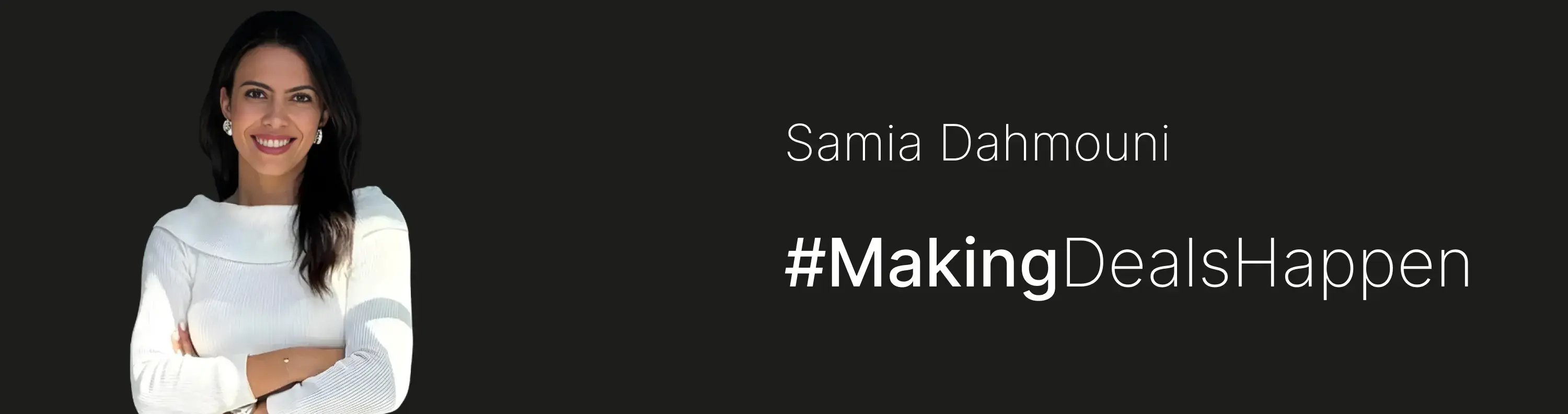
DC: Can you introduce yourself as well as Cyclezen?
Samia Dahmouni: I am Samia Dahmouni, founder of Cyclezen, a mission-driven company dedicated to the circular economy surrounding menstruation. We have two objectives.
1: Improve women's menstrual well-being in public and private establishments by installing dispensers of 100% organic sanitary products, free from any plastic and/or chemicals.
2: Reduce the environmental impact of disposable sanitary products. Our products being entirely organic, we are developing the first menstrual waste recovery chain to transform them into compost for agriculture or biogas for housing.
DC: How did this idea originate, and what in your background made you particularly sensitive to this issue?
Samia D.: The project originated from a global awareness of our consumption patterns and my desire to contribute to more sustainable solutions. I focused my career on an impact start-up that was developing a traceability tool for textiles, an experience that allowed me to understand the legislative issues related to the AGEC law, which strongly supports sustainable consumption and the fight against waste.
After leaving this start-up, I finally had the freedom to pursue my own project. During a trip, I came across sanitary protection packaging, namely plastic tampon applicators. I wondered how such products could still exist, even thinking that they were banned.
Doing my research, I discovered that the AGEC law had actually just published a decree on single-use sanitary products (diapers, wipes, tissues and menstrual protection) with the aim of promoting healthier products, reducing plastic and developing a circular economy around this waste. This is how Cyclezen gradually came into being: the desire to offer consumers products that are good for their health and, above all, to reduce environmental impact without placing the mental burden on women of choosing between health, ecology and practicality.
Especially since for more than 70% of women, it is still difficult to switch to reusable solutions.
DC: Having an idea and starting a business are not the same thing. What led from the idea to the product?
Samia D.: I already had this itch to start a business, and I told myself it was time to put my energy into a project I really believed in, one that I could shape in my own way, following my intuition and the subtle signs I was picking up on.
As I thought about it more, the need to improve women's well-being in public and private spaces, and specifically the idea of menstrual well-being, through the installation of dispensers, came to the fore. It wasn't a brand-new idea, but the existing solutions were neither sustainable nor always healthy, and there was no end-to-end traceability. That's exactly what I wanted to bring to the table.
The real turning point came when I presented my project at a competition to join an incubator. On the very same day, people capable of helping me develop this sector came to see me: they were looking for precisely these kinds of projects to support. For me, that was decisive. If an international industrialist is willing to support me, I have to go for it.
DC: When did you realise that the model was scalable but also that you needed to raise funds?
Samia D.: As soon as the idea emerged, I knew the model was scalable. I could already see competitors in other regions or countries, but none were established locally in Nouvelle-Aquitaine. So I knew I could quickly establish myself here, create a strong brand, and expand the model nationally, before scaling it across Europe. Many EU countries are very sensitive to menstrual wellbeing, sustainability and circular economy, so the opportunity was obvious.
I also understood from the outset that I would need to raise funds. I had to pay my manufacturers up front, recruit quickly to catch up with my competitors, and finance the entire R&D phase associated with waste recovery.
When I joined the incubator on July 1st, 2024, an investor event was taking place two days earlier. I did everything I could to attend, even though I hadn't finalised anything yet. I was transparent: all I had was an idea. I just wanted to meet them. It was important for me to get a head start and lay the groundwork immediately.
DC: How did you project yourself when preparing this fundraising campaign?
Samia D.: For me, a fundraising campaign always tells the story of an entrepreneur, and that story is unique to each and every one. I had a very clear vision right from the start: I knew which funds I wanted to work with, which business angels I wanted by my side... ‘Who do I really want to move forward with?’ The idea was to avoid ending up choosing by default, which I've seen some entrepreneurs do out of necessity. I didn't want that, especially after taking twenty years to get started.
I said it from day one to everyone I spoke to: I want to be able to leave a board meeting, go out to lunch with my investors and chat about anything and everything. That was really the vision I had in mind back in July 2024, and that's how I started to map out my fundraising.
I had a figure in mind, but the further I got, the more I realised I would need to double it. Given the economic climate, if I didn't get any loans or grants, I had to consider the worst-case scenario: being able to live for a year and a half without any revenue.
Of course, my ambition was to generate revenue, but I had to plan for the possibility that, even with the product launched, we would not make any money right away. Fortunately, that has not been the case.
DC: Fundraising is often portrayed in a romanticised or, on the contrary, a very mechanical way. What aspects of the process surprised you the most in reality?
Samia D.: Honestly, it wasn't a walk in the park. I did exactly what not to do: fight ten battles at once. I was simultaneously managing fundraising, receiving my stock, rolling out to my first customer, and my first recruitments.
I ultimately achieved my goal, but I was completely exhausted. People generally say to either grow your business or raise funds. But I didn't want to slow down and lose the lead I had over my competitors.
At first, I approached things rather casually: informal meetings with people who were interested and ready to invest. It wasn't until March 2025 that I began to structure the whole process. Five investors were interested, including one who had already committed via a shareholder current account.
Finally, once everything was ready early in July, I managed to get all my potential investors on the phone within two hours. Four of them bailed on me last minute. I was at 50% of what I had anticipated when a fortunate set of circumstances occurred. I found myself talking to an entrepreneur, the founder of an international company in a field similar to mine (whose name I cannot reveal at this stage).
I presented Cyclezen to him solely to get some feedback, not to raise funds. I shared my five-year vision with him, and apparently that's what struck a chord: my visionary nature. So much so that he told me he wanted to invest immediately. I never imagined that this person would be the one to make up exactly what I needed to finalise the funding round in October.
It wasn't really luck, more a convergence of circumstances and being ready. He asked me for confidential information, my pitch deck... I had nothing to lose. I explained my strategy to him, and he gave me 90% of his ‘go’ immediately, even though we had only just met. He ticked all the boxes of the ideal investor. In September, he reviewed the partnership agreement, we adjusted a few points, and it was signed.
Looking back, I realise that the three investors who said no were exactly what I needed. They could have been a great asset, but not as much as this investor is today. It goes to show: behind every failure lies a victory – if one knows how to seize it.
DC: A fundraising campaign doesn't exactly stop there: where are you today in terms of Cyclezen's overall funding?
Samia D.: We have finalised the first part of the fundraising, the dilutive part, and I have already announced this officially. However, the fundraising is not yet complete: we are still working on the non-dilutive part, with grants and debt.
This is why we are not yet announcing the complete closure of the operation: until the non-dilutive part is finalised, the overall fundraising remains ongoing.
DC: For this process, you have opened a data room with DealCockpit: we thank you for that. This is a rare practice in the Seed stage, as entrepreneurs generally consider the operation too small. Why did you make this choice?
Samia D.: I am a very cautious person, and I definitely did not want to send my deck by email. Even during the seed stage, I needed a tool that would allow me to track what I was sharing. I was convinced of what I was building, and circular economy is a subject that can be difficult to grasp: being transparent with investors was essential. A data room allowed me to securely share my forecasts, my deck, and any other documents without taking any risks. For me, it was a natural reflex.
Many entrepreneurs deprive themselves of this at this stage, but if you ask me, that's a mistake: even during seed funding, the data you share is confidential. We're well past the stage of post-it notes. I worked for hours on my forecast with my key partners; there was no way I was going to let it circulate freely. A Drive doesn't allow you to track who is doing what with your documents.
The other advantage, which perfectly satisfied my cautious nature, was knowing who was genuinely interested in Cyclezen. Many funds request information, but very few take the time to review it. With email, all you can do is follow up. With DealCockpit, I could see who was logging in, who was downloading, who was coming back. This strategic element allowed me to weed out the wheat from the chaff and avoid wasting time chasing after investors who, in reality, had no conceivable interest.
A fundraising round is extremely time-consuming. I didn't want to be the start-up that follows up incessantly. If someone didn't look at the documents, I could simply remove them: there was no risk of my deck remaining in anyone's inbox.
There's also the issue of protection. I once met with a fund that never told me it had one of my competitors in its portfolio. Fortunately, I discovered this by looking at their website when I got home. If I had sent them my deck by email, my confidential information could have ended up directly in the hands of my competitor. With a data room, even if I had added them, I could have removed them immediately.
It's definitely an added layer of security to protect your business.
DC: Have there been any changes in how you run the company since the investors came on board?
Samia D.: I run the company however I want to run it because I chose my partners carefully. My investors signed a partnership agreement that is very advantageous for me, which they questioned but never challenged. This agreement gives me true freedom while remaining available and consulting with the board whenever necessary.
I am especially fortunate to have chosen people who trust me. They obviously believe in Cyclezen, but first and foremost, they have invested in me: in my personality, in my ability to execute, to carry the project forward and to deliver. If tomorrow I find myself facing an obstacle that I cannot overcome on my own, they know that I will have already done everything possible. And that if I ask them for help, it's because I need additional expertise or a strategic boost.
They understand that this entrepreneurial path means a great deal to me, that it is also a way for me to fulfil myself. And because they have understood this, they are supporting me in this ambition.
Today, I have a board that many would dream of having, especially at a time when it is difficult to raise funds, even more so for a cause that people would rather ignore, but which is nevertheless a major future issue.
At our first board meeting, they didn't dwell on profitability or short-term metrics. Instead, their priority was to understand at which milestones they themselves could intervene. If I have an exceptional need, all I have to do is send an email and three days later, a committee is organised to discuss this strategic issue that could change the trajectory of Cyclezen. Everyone is present, thinking, sharing their insights. And if the meeting wasn't via video conference, I'm certain we'd all go out for lunch together.
The big difference in how I run the company today is that I am no longer alone. Beyond my team, I now have real partners by my side, not just investors. Before, I carried this mission alone; today, I can call on them at any time. And I will continue to be transparent and rigorous in order to show them that they made the right call in trusting me with the development of Cyclezen.
DC: We'll see you again for your next fundraising round, so?
Samia D.: Yes, I plan to start my roadshow at the end of 2026, for a funding round I hope to close in 2027, in view of a national rollout of Cyclezen.
DC: We wish you all the best with that. Thank you, Samia!
Corinne Previtali discusses new liability challenges that advisors face and the need to provide better support to company directors in their...
Interview: What is necessary for successful M&A operations, US market tendencies, and the differences between the US and European market.
In our interview we talk about the current challenges of startups, the evolution of fundraising, and why entrepreneurs should change their focus.